

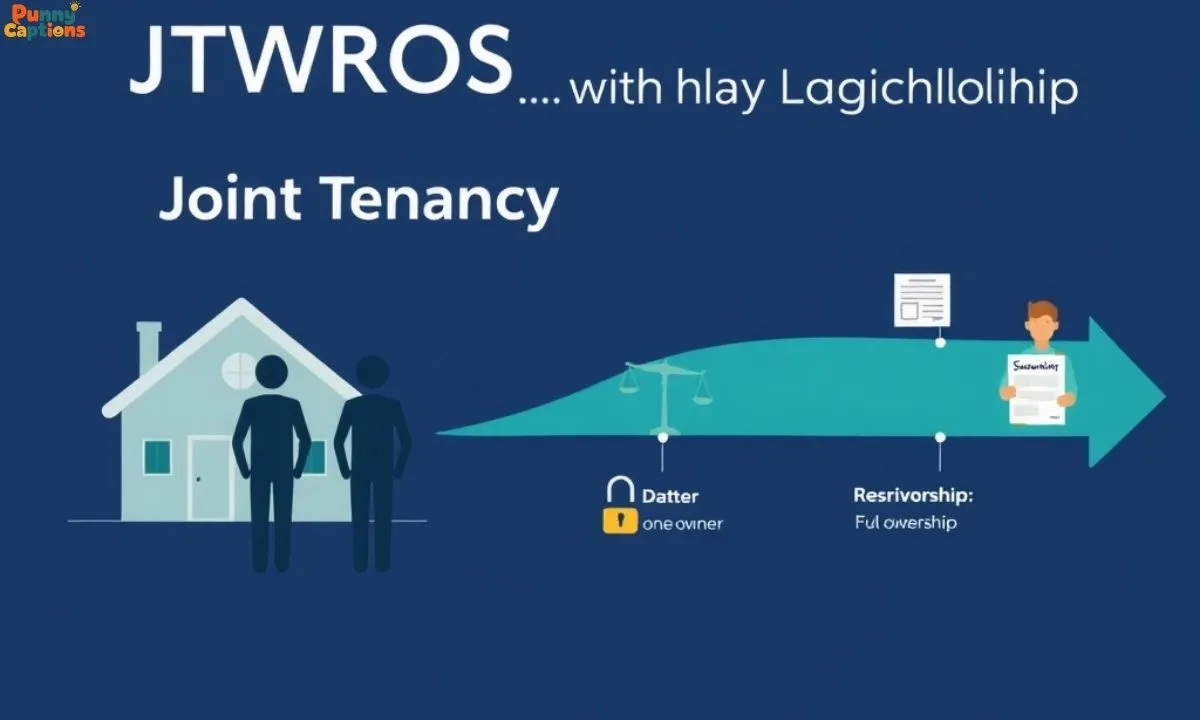
JTWROS Meaning is a term many people see in banking or property papers, and it may look confusing at first. However, the meaning is simple once you understand it. It is commonly used when two or more people share ownership of something like a bank account or property.
JTWROS stands for Joint Tenants With Right of Survivorship. It means that all owners have equal rights to the asset. If one owner passes away, their share automatically goes to the remaining owner or owners without going through legal processes.
People often use JTWROS for bank accounts and real estate because it helps avoid complications after death. It can make the transfer of ownership quick and smooth. However, it also comes with some risks, so it is important to fully understand how it works before using it.
What Does JTWROS Meaning?
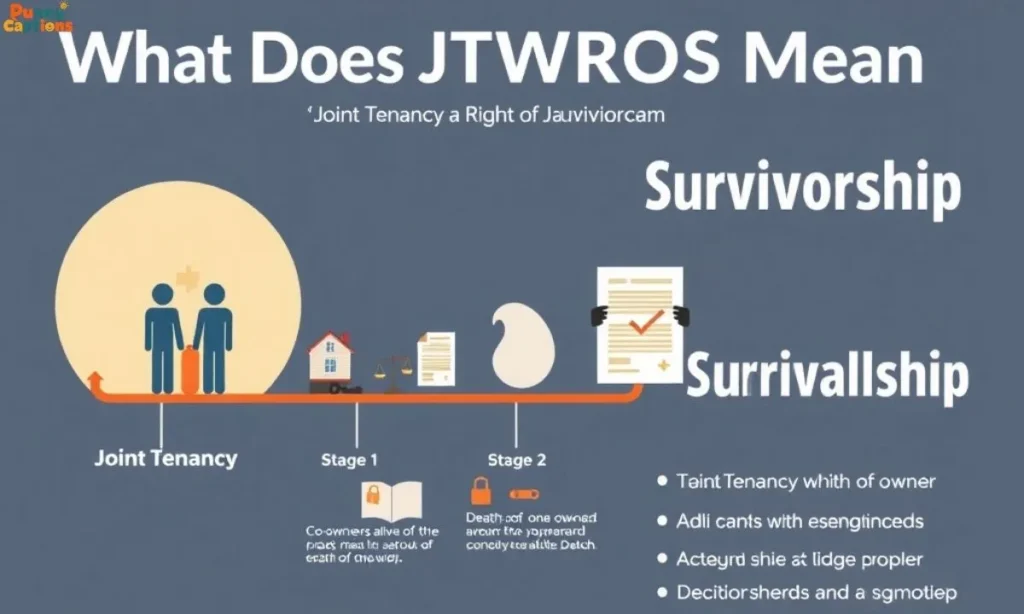
JTWROS stands for Joint Tenancy With Right of Survivorship. It is a type of co-ownership arrangement where two or more individuals hold equal shares of an asset — such as real estate, a bank account, or an investment portfolio — and when one owner dies, their share automatically passes to the surviving owner or owners.
This automatic transfer is the defining feature of JTWROS and sets it apart from other types of joint ownership. It bypasses the probate process entirely, which means the asset does not go through a court-supervised distribution procedure after death. Instead, ownership transitions seamlessly to the surviving party.
JTWROS is commonly used between married couples, domestic partners, close family members, and sometimes business partners. It is particularly popular in banking and real estate transactions, though it can apply to virtually any jointly held asset.
JTWROS Full Form and Definition
- Joint Tenancy: This refers to a shared ownership structure where all parties hold an equal and undivided interest in the asset. No single owner possesses a specific portion; instead, all owners collectively hold the whole.
- With Right of Survivorship: This is the legal mechanism that ensures the surviving owner(s) automatically inherit the deceased owner’s share without the need for probate or a will.
Legally, JTWROS is defined by four foundational unities — time, title, interest, and possession. All owners must have acquired the asset at the same time, under the same legal title, with equal interest, and with equal right to possess the entire property. If any of these four unities is broken, the joint tenancy may be severed, and the ownership structure could default to a tenancy in common — a very different arrangement with distinct legal implications.
It is worth noting that JTWROS is a common law concept primarily used in the United States, Canada, and several other common law jurisdictions. The specific rules governing JTWROS may vary slightly depending on the state or country where the asset is located.
How JTWROS Works in Banking and Real Estate
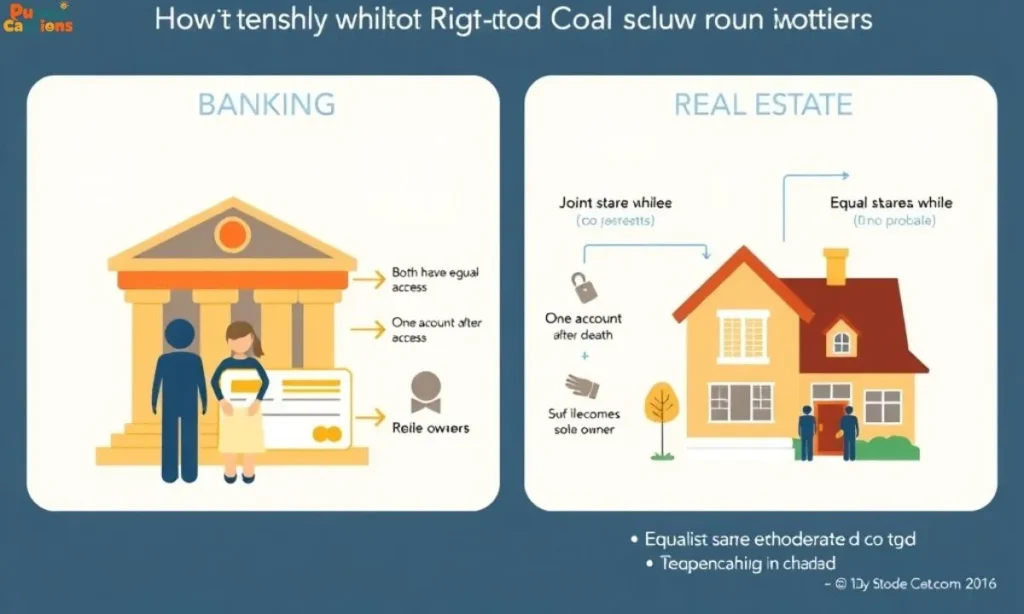
JTWROS operates differently depending on the type of asset involved. Below, we explore how it functions in the two most common contexts: banking and real estate.
JTWROS in Banking
When a joint bank or investment account is designated as JTWROS, all account holders have equal access to and ownership of the funds. Either party can deposit or withdraw funds without the permission of the other. This makes JTWROS accounts highly practical for everyday use, especially for couples managing shared household expenses.
Upon the death of one account holder, the surviving holder simply needs to provide a death certificate to the bank. The account — along with all its funds — transfers to the survivor immediately. The funds do not become part of the deceased’s estate, and creditors of the deceased generally cannot claim them (though this may vary by jurisdiction).
Brokerage accounts, certificates of deposit (CDs), and money market accounts can all be structured as JTWROS. The designation is typically indicated on the account opening forms and should be clearly specified at the time of account creation.
JTWROS in Real Estate
In real estate, JTWROS is created through the deed when a property is purchased or transferred. The deed must explicitly state that the ownership is held as joint tenants with right of survivorship — otherwise, a court may interpret the ownership as a tenancy in common.
Both parties have equal, undivided ownership of the entire property. Neither owner can sell, mortgage, or otherwise encumber their share without the consent of the other. If one owner dies, the surviving owner automatically becomes the sole owner of the entire property, without any court proceedings.
However, it is important to understand that while JTWROS avoids probate, the surviving owner may still face estate taxes or capital gains taxes depending on the value of the property and applicable tax laws. Consulting a tax or legal advisor is strongly recommended.
Key Benefits of JTWROS Accounts
- Avoidance of Probate: Perhaps the most significant benefit of JTWROS is that it bypasses the probate process entirely. Probate can be a lengthy, expensive, and public court process. With JTWROS, the surviving owner receives the asset almost immediately after providing proof of the co-owner’s death — no court involvement required.
- Simplicity of Transfer: The transfer process for JTWROS assets is straightforward. A certified copy of the death certificate is typically all that is needed. This simplicity reduces both administrative burden and emotional stress during an already difficult time.
- Immediate Access: The surviving owner gains immediate access to the asset, which can be crucial for financial stability — particularly when the asset is a primary bank account or family home.
- Equal Ownership Rights: All JTWROS owners have equal and full rights to the property during their lifetimes. This promotes transparency and fairness in co-ownership arrangements.
- Protection of Surviving Spouses and Partners: JTWROS is especially beneficial for married couples and long-term partners. It ensures the surviving spouse is not left scrambling for access to shared assets while waiting for estate proceedings to conclude.
- Cost-Effective Estate Planning: By avoiding probate, JTWROS can save significant amounts in legal fees and court costs, making it a cost-effective element of estate planning for many families.
Disadvantages of JTWROS You Should Know
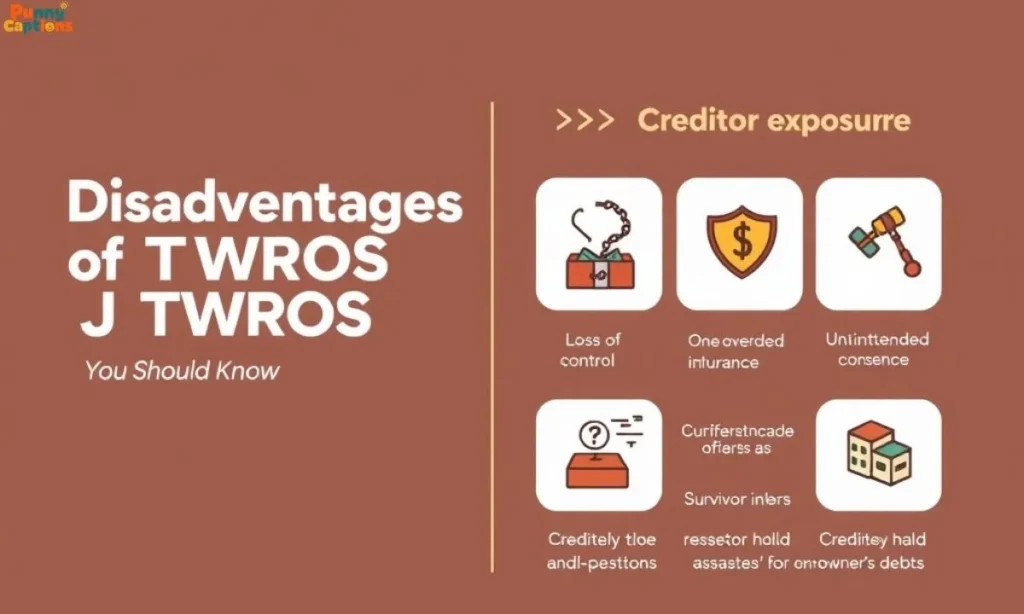
Despite its advantages, JTWROS is not without its drawbacks. It is critical to understand the potential downsides before entering into this ownership arrangement.
- Cannot Override a Will: One of the most misunderstood aspects of JTWROS is that it supersedes your will. No matter what your will states, a JTWROS asset will pass directly to the surviving owner — not to whoever is named in your will. This can create unintended consequences if your estate plan is not carefully coordinated.
- Creditor Vulnerability: In many jurisdictions, creditors of a co-owner can place a lien on the jointly owned property for that owner’s debts. If one co-owner has significant financial liabilities, the other owner’s interest in the shared asset could be at risk.
- Loss of Control Over Inheritance: With JTWROS, you cannot leave your share of the asset to your children, other family members, or a charity of your choice. The asset will always pass to the surviving co-owner, regardless of your preferences.
- Potential Tax Implications: While JTWROS avoids probate, it does not necessarily shield the asset from estate taxes or capital gains taxes. Depending on the size of the estate and applicable laws, significant tax liabilities may still arise.
- Difficulty Dissolving the Arrangement: To dissolve a JTWROS arrangement, all owners must agree, or one owner must take legal action. This can be particularly difficult and costly in the case of a dispute between co-owners.
- Unilateral Actions by One Owner: In some cases, one co-owner can sever the joint tenancy by transferring their share to a third party without the other owner’s consent — instantly converting the ownership to a tenancy in common. This can be a significant vulnerability.
JTWROS vs Joint Tenancy: What’s the Difference?
A common source of confusion is the distinction between JTWROS and plain joint tenancy. In practice, JTWROS is a specific form of joint tenancy — the terms are often used interchangeably, but there is an important nuance.
Standard joint tenancy always includes the right of survivorship under common law. However, in some U.S. states and jurisdictions, the right of survivorship is not automatically assumed in a joint tenancy unless it is explicitly stated in the ownership document. This is why the term JTWROS — with the explicit phrase ‘with right of survivorship’ — is used to eliminate any ambiguity.
It is equally important to distinguish JTWROS from tenancy in common (TIC), which is a fundamentally different form of co-ownership:
- Equal vs. Unequal Shares: In JTWROS, all owners hold equal shares. In TIC, owners can hold unequal shares — for example, one owner might hold 60% and another 40%.
- Survivorship Rights: In JTWROS, a deceased owner’s share automatically passes to the surviving owners. In TIC, the deceased owner’s share becomes part of their estate and passes according to their will or intestacy laws.
- Probate: JTWROS bypasses probate. TIC does not — the deceased owner’s share must go through probate.
- Inheritance Flexibility: TIC allows owners to leave their share to anyone they choose via a will. JTWROS does not offer this flexibility.
Real-Life Examples of JTWROS
To illustrate how JTWROS works in practice, consider the following real-world scenarios:
Example 1: Married Couple and Their Family Home
Michael and Sarah purchase a home together and take title as joint tenants with right of survivorship. When Michael unexpectedly passes away, Sarah does not need to go through probate to claim the home. She simply presents Michael’s death certificate to the county recorder’s office. The property is now legally hers — without delay, legal fees, or court involvement.
Example 2: Joint Brokerage Account
Two siblings, James and Linda, open a joint investment account designated as JTWROS to manage their inherited savings. Both have equal access to the funds. When James passes away, Linda automatically becomes the sole owner of the brokerage account and can continue managing the investments without any court intervention.
Example 3: Business Partners and Commercial Property
Two business partners, Raj and Tom, purchase a commercial property as JTWROS. When Raj dies, Tom automatically inherits full ownership of the property. However, Raj’s family receives nothing from the property — even if Raj had expressed a desire to leave his share to his children. This illustrates why JTWROS may not always be the best choice for business partners who have separate family obligations.
Example 4: Parent and Adult Child
An elderly parent adds their adult child as a JTWROS co-owner on their bank account to facilitate easy fund management and care expenses. Upon the parent’s death, the adult child immediately inherits the account funds. While convenient, this setup can create conflict if there are other siblings who expected to share in the parent’s estate.
These examples highlight both the convenience and the complexity that can arise with JTWROS arrangements, reinforcing the importance of planning carefully.
Who Should Use JTWROS?
JTWROS is not a one-size-fits-all solution. It is best suited for specific situations and relationships. Here is a guide to help you determine whether JTWROS is right for you:
- Married Couples and Domestic Partners: JTWROS is often an excellent choice for spouses and long-term partners who want to ensure the seamless transfer of shared assets. It provides immediate financial security for the surviving partner without the need for lengthy legal processes.
- Individuals Seeking to Avoid Probate: If your primary goal is to keep your estate out of probate court — to save time, money, and maintain privacy — JTWROS is a powerful tool. It is one of the simplest ways to ensure a direct transfer of assets outside of the probate process.
- Parents and Adult Children: JTWROS can be practical for parents who want to give an adult child immediate access to financial accounts for caregiving purposes. However, it must be used with caution if there are multiple heirs, as the JTWROS account will go entirely to the surviving co-owner.
- People with Simple Estates: If your estate is straightforward — a home, a bank account, a few investments — JTWROS can be a low-cost, low-complexity way to pass those assets to a surviving loved one.
Who Should Think Carefully Before Using JTWROS:
- Business Partners: Unless the business partners have explicitly agreed that the surviving partner should inherit the full asset upon death, JTWROS can create unintended outcomes — especially when both partners have families of their own.
- People with Complex Estates: If you have multiple heirs, significant assets, or specific wishes for how your estate should be distributed, JTWROS may conflict with your estate planning goals. A trust or other legal mechanism may be more appropriate.
- Individuals with Potential Creditor Issues: If one co-owner has significant debt or financial liabilities, JTWROS may expose the shared asset to creditor claims. Legal advice is strongly recommended in such situations.
Frequently Asked Questions
What does JTWROS mean?
JTWROS means Joint Tenants With Right of Survivorship, where ownership passes to the surviving owner after death.
What is JTWROS in banking?
In banking, JTWROS refers to a joint account where the surviving account holder gets full control after one owner dies.
What happens in a JTWROS account after death?
When one owner dies, their share automatically transfers to the remaining owner without probate.
Is JTWROS the same as joint tenancy?
JTWROS is a type of joint tenancy that includes the right of survivorship feature.
What is the full form of JTWROS?
The full form of JTWROS is Joint Tenants With Right of Survivorship.
Is JTWROS a good idea?
It can be useful for easy asset transfer, but it depends on your financial and legal needs.
What is the difference between JTWROS and tenants in common?
JTWROS transfers ownership automatically, while tenants in common allows separate shares to be inherited.
Can JTWROS be used for property?
Yes, JTWROS is commonly used for real estate and shared property ownership.
Does JTWROS avoid probate?
Yes, assets under JTWROS usually bypass probate and go directly to the surviving owner.
Who should use JTWROS accounts?
People who want simple and automatic transfer of ownership often choose JTWROS accounts.
Conclusion
JTWROS Meaning is a simple but powerful concept in shared ownership. It allows two or more people to own an asset together with equal rights. The biggest advantage is that ownership transfers automatically to the surviving owner, which avoids delays and legal complications.
This type of arrangement is commonly used in bank accounts and real estate. It can make estate planning easier and faster. However, it also means that all owners have equal control, which may not be suitable for every situation.
Before choosing JTWROS, it is important to understand both its benefits and risks. Making the right decision depends on your personal needs and financial goals. With the right knowledge, JTWROS can be a helpful tool for managing shared assets.