

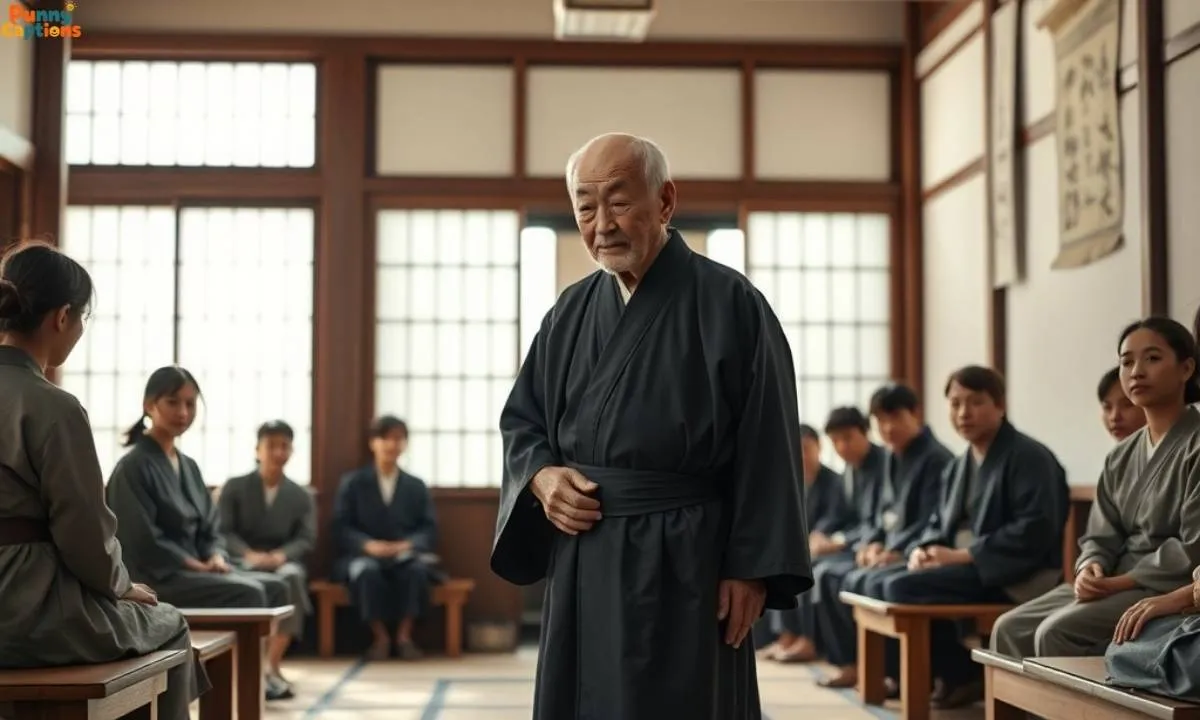
The word “Sensei” comes from Japan and is used to show respect. It is a polite title for someone who teaches or guides others. People use this word for teachers, mentors, and skilled experts. It shows honor for knowledge and experience.
In martial arts like Karate and Judo, a teacher is called Sensei. Students use this title to show respect and discipline. It creates a strong bond between teacher and student. The Sensei helps students grow both mentally and physically.
The meaning of Sensei is not only about teaching skills. It also means guiding someone in life and values. A Sensei shares wisdom, patience, and good character. This word represents respect, learning, and lifelong growth.
The Meaning of Sensei
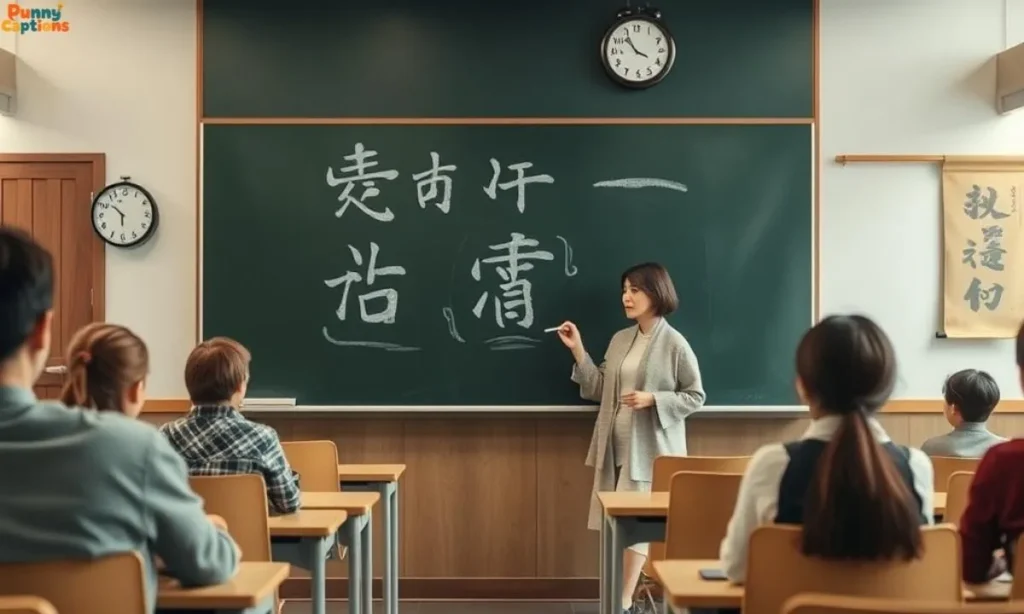
The word sensei (先生) is one of the most recognisable Japanese words in the English-speaking world, yet it is also one of the most consistently misunderstood. Borrowed into popular culture through martial arts, anime, and manga, it is routinely used in ways that would make a native Japanese speaker wince. To use it correctly — and respectfully — it helps to understand what it actually means, where it comes from, and how it functions within the Japanese language.
Broken down into its two kanji characters, sensei literally means “one who was born before” or “one who has gone before.” The first character, 先 (sen), means “before” or “ahead,” and the second, 生 (sei), means “life” or “birth.” Together, they carry a nuanced sense of someone who has walked a path ahead of you — not simply older in age, but more experienced, more advanced in knowledge or practice. It is a word that inherently implies a relationship: there is a sensei only because there is a student.
Honorifics
To understand sensei properly, you first need to understand the role of honorifics in the Japanese language. Japanese is a deeply relational language — the way you speak to someone changes depending on your relationship to them, their social standing, and the context of the conversation. This system of relational speech is called keigo (敬語), and honorific titles are an essential part of it.
The most common honorific in Japanese is san (さん), a neutral, polite title roughly equivalent to “Mr.” or “Ms.” in English. Beyond that, you have titles like kun (くん) and chan (ちゃん), used for those younger or closer to you, and sama (様), a highly formal and reverential title. Sensei occupies its own distinct category: it is not a generic polite title, but a specific honorific reserved for those who teach, guide, or hold a high degree of mastery in their field.
Honorific Usage
In Japan, sensei is used as an honorific suffix — that is, it is attached after a person’s name, or used on its own in place of their name. It is applied to a specific and fairly well-defined set of people: schoolteachers, university professors, doctors, lawyers, politicians, and masters of traditional arts such as calligraphy, tea ceremony, or martial arts.
The common thread among all of these is expertise and guidance. A doctor is called sensei not merely because of their degree, but because they occupy a position of trusted knowledge relative to the patient. A martial arts master is called sensei because their students look to them as the one who has “gone before” on the path of training. The title communicates deference and respect — it is the student or subordinate who uses it, not the person themselves.
Common Mistake 1: Referring to Yourself as Sensei
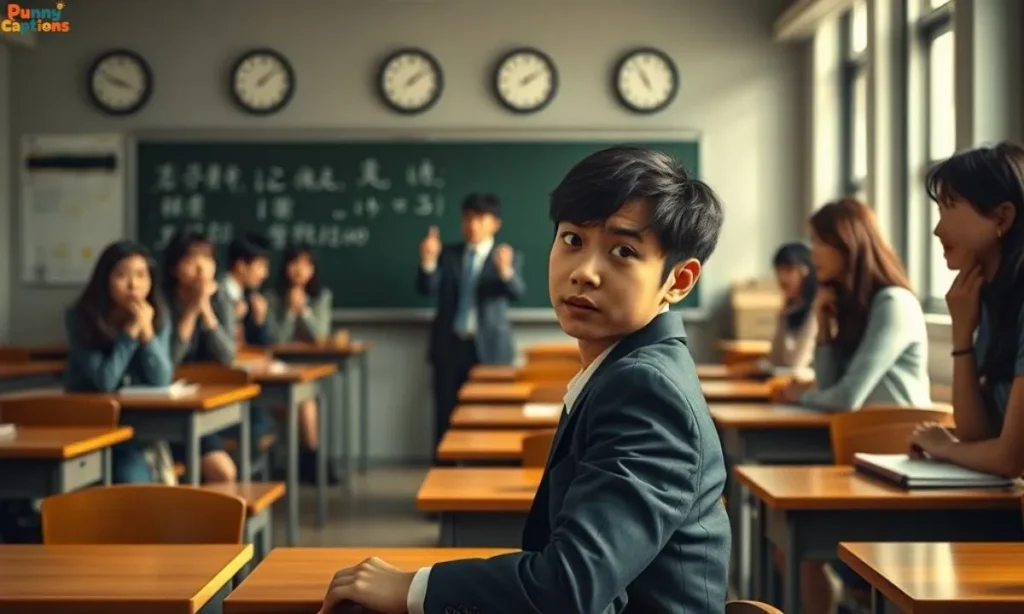
Perhaps the most fundamental error non-native speakers make is referring to themselves as sensei. In Japanese culture, using an honorific title for yourself is considered deeply inappropriate — even arrogant. Honorifics exist to elevate others, not oneself.
A Japanese teacher, for example, would never introduce themselves by saying “Watashi wa sensei desu” (“I am a sensei”) in any formal or social context. Instead, they would use their own name or a humble equivalent. The title sensei is bestowed by others as a mark of respect; to claim it for yourself implies that you are demanding reverence rather than earning it. In Western martial arts schools and dojo settings run outside Japan, it is unfortunately common to hear instructors refer to themselves this way — a habit that, while perhaps born of enthusiasm for the culture, inverts the very humility the word is meant to express.
Common Mistake 2: Name + Sensei vs. Sensei + Name
In English, titles typically precede a name: “Doctor Smith,” “Professor Jones.” This leads many learners to apply the same logic to Japanese, placing sensei before a name. In Japanese, however, honorifics always follow the name. The correct form is [Name] + Sensei — for example, Tanaka-sensei, never Sensei Tanaka.
This rule applies consistently across all Japanese honorifics: you say Yamada-san, not San Yamada; Hiroshi-kun, not Kun Hiroshi. Reversing the order not only sounds unnatural to a Japanese speaker — it signals a misunderstanding of how the language is structured. When learning Japanese, it is worth treating the honorific as a suffix rather than a title: it belongs at the end, attached to the name, not standing in front of it.
Common Mistake 3: Sensei Isn’t Technically a Job or Position
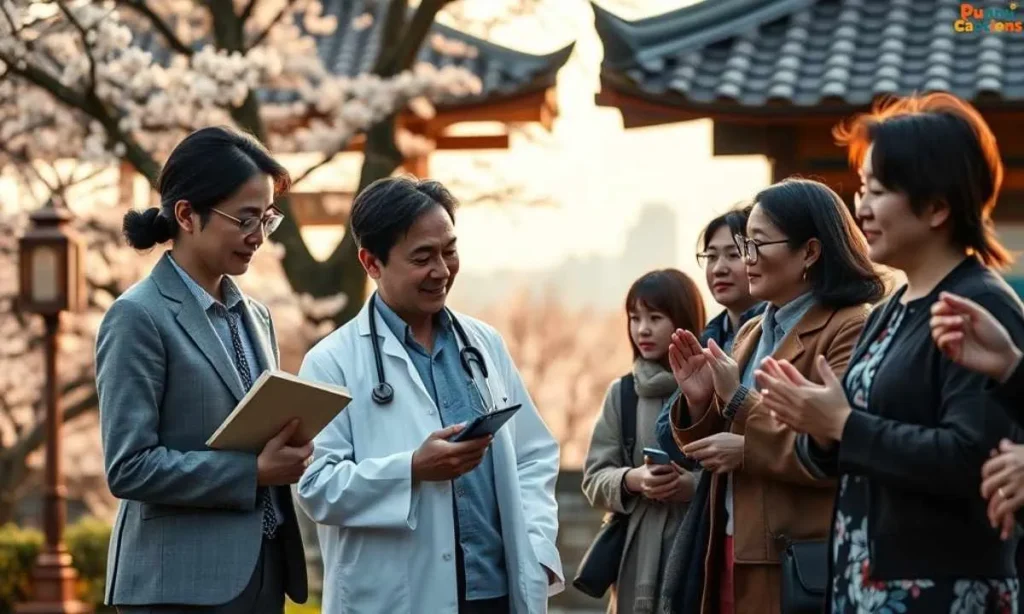
One of the subtler misconceptions about sensei is treating it as a job title or professional role — as though it were equivalent to “teacher” or “instructor” on a business card. In Japanese, sensei is an honorific applied to a role, not the name of the role itself.
The word for teacher as a profession or occupation is kyōshi (教師) or kyōin (教員). When a school lists its staff, it does not list them as sensei — it lists their actual position. Sensei is what students and colleagues call them out of respect. Similarly, a doctor’s professional title is isha (医者) or ishi (医師); sensei is how patients and staff address them. The distinction matters because it reinforces a key point: sensei describes a relationship and a social dynamic, not a career. You cannot put sensei on a résumé. You can only receive it from those who look up to you.
Evolution of Language

Language, of course, is never static. As Japanese culture has spread globally through martial arts, pop culture, gaming, and technology, words like sensei have taken on new lives far beyond their origins. In English, sensei is increasingly used as a general term of admiration for anyone with great skill or knowledge — a coding sensei, a cooking sensei, a life sensei. This informal, metaphorical use is largely playful and carries its own charm.
Within Japan itself, the word has also evolved. It is sometimes used sarcastically — calling a particularly pompous colleague sensei with a slight edge to the voice carries its own meaning. Manga and anime have played with the title extensively, using it in ironic, comedic, or subversive ways. And as Japan’s youth culture shifts, some younger people are pushing back against rigid honorific systems altogether, favouring a more egalitarian style of address in casual settings.
None of this erases the original meaning. Rather, it adds layers to it. Understanding that sensei began as a deeply relational, humble word — one given, never claimed — makes even its informal modern uses richer. Whether you are bowing to a martial arts master in a dojo or cheekily calling your friend a sensei because they finally taught you how to make perfect ramen, you are participating in a long, evolving conversation about knowledge, respect, and the relationship between those who teach and those who learn.
Frequently Asked Questions
What is the meaning of Sensei?
The word “Sensei” means teacher or mentor. It is a respectful title used in Japan.
Why do people say Sensei?
People say Sensei to show respect to someone who teaches or guides them. It shows honor and appreciation.
Is Sensei only used in martial arts?
No, it is not only for martial arts like Karate. It is also used for teachers and professionals.
What does Sensei mean in English?
In English, Sensei means teacher, master, or mentor. It describes someone with knowledge and experience.
Can a school teacher be called Sensei?
Yes, in Japan, school teachers are also called Sensei. It is a common and respectful term.
What is the difference between Sensei and teacher?
Sensei shows more respect and honor. It also includes guidance and life lessons, not just teaching.
Who can be called a Sensei?
Anyone who teaches or guides others with skill and wisdom can be called Sensei. It depends on respect, not just job title.
Is Sensei a formal title?
Yes, it is a polite and formal way to address someone experienced. It is widely used in Japanese culture.
Why is Sensei important in culture?
Sensei represents respect, discipline, and learning. It plays a big role in education and traditions.
Can Sensei be used outside Japan?
Yes, people around the world use it, especially in martial arts like Judo. It keeps its respectful meaning everywhere.
Conclusion
The word “Sensei” is more than just a title. It shows deep respect for a teacher or guide. People use it to honor knowledge and experience. It reflects the value of learning in life.
In Japanese culture, this word carries a strong meaning. It is used for mentors in many fields, not just sports. A Sensei helps others grow with patience and care. Their role is important in shaping students’ futures.
Overall, Sensei represents respect, wisdom, and guidance. It reminds us to value those who teach us. Whether in school or life, a Sensei makes a difference. This word stands for lifelong learning and respect.